2026-08-21 · Mike Reynolds
Hurricane Season Electrical Checks for Dunedin Homes
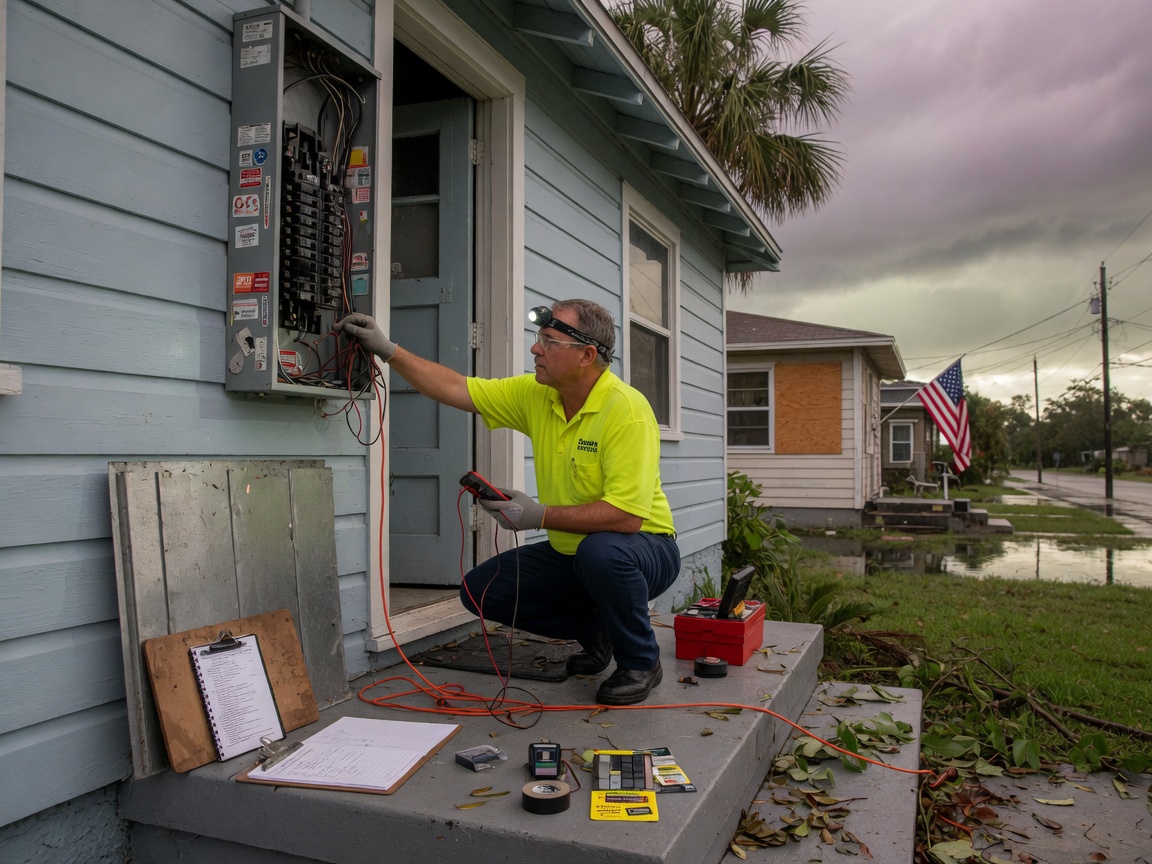
Hurricane season electrical checks for Dunedin homes center on inspecting the main panel for corrosion, testing all GFCI outlets, securing exterior connections, and verifying surge protection, with a full walkthrough typically requiring 2–4 hours depending on home age and size in Pinellas County.
Assessing Electrical Panels for Storm Readiness
Homes in Downtown Dunedin often date to the 1960s–1980s and carry 100-amp panels that struggle with modern loads during outages. High humidity accelerates oxidation on breakers and bus bars, so remove the cover and look for rust or burn marks around lugs. Check that all breakers reset cleanly and that the main disconnect functions without hesitation. Properties near Honeymoon Island State Park see more salt air exposure, which speeds corrosion. If the panel shows signs of overheating or uses outdated fuse boxes, plan an upgrade before the next storm season hits. Residents in Curlew Creek report frequent nuisance trips after heavy rain when water infiltrates the panel enclosure.
Securing Outdoor Wiring and Outlets
Dunedin Causeway winds and driving rain expose exterior receptacles, landscape lighting, and pool equipment to direct moisture. Walk the perimeter and confirm every outdoor outlet has a working in-use cover and intact GFCI protection. Replace any cracked weatherproof boxes or brittle NM cable running along soffits. Homes backing up to Curlew Creek often have buried lines that shift with saturated soil, creating hidden shorts. Test each GFCI by pressing the button and confirming power cuts at downstream outlets. Secure loose conduit straps that vibration from high winds can loosen.
Evaluating Wiring in Older Downtown Dunedin Properties
Many Downtown Dunedin homes still rely on original cloth-insulated wiring or aluminum branch circuits that expand and contract with temperature swings common in hot humid summers. Wiring concerns in older Downtown Dunedin properties highlights how these materials fail under repeated storm surges. Open a few junction boxes in attics and crawl spaces to inspect for brittle insulation and loose splices. Pay special attention to circuits feeding HVAC systems, which run continuously during recovery from outages. If aluminum wiring is present, consider pigtailing with copper or a full rewire to reduce arcing risk.
Adding Surge Protection and Lightning Measures
Pinellas County experiences frequent lightning during afternoon thunderstorms. Install a whole-house surge protector at the main panel rated for at least 50,000 amps to safeguard appliances when power flickers. Supplement with point-of-use protectors on sensitive electronics. Check that any existing lightning rod system grounds remain intact and that the rod-to-ground wire shows no corrosion. Homes along the Dunedin Causeway benefit from additional surge devices on dock and boathouse circuits exposed to open water.
Post-Storm Safety Steps and When to Call
After any named storm, avoid resetting breakers until standing water recedes and an electrician inspects for moisture inside panels or outlets. Document tripped breakers with photos before restoring power. For homes in Safety Harbor or Palm Harbor that share the same coastal exposure, schedule a follow-up inspection within 48 hours of landfall. The team operates Monday–Friday 8am–6pm and Saturday 9am–2pm to handle urgent post-storm assessments across Dunedin and nearby communities.